Cereya Adult Autism Guide
Autism in adult women: subtle signs, masking, and late diagnosis
Autism in adult women is often discussed through subtle signs, masking, and late diagnosis. These themes matter but need nuance: not all autistic women mask in the same way, and not everyone who masks is autistic.
Social expectations may encourage some people to observe, imitate, anticipate, or reduce their needs to maintain an appearance of adjustment. This can make internal effort less visible.
This page helps organize observations without promising a diagnosis. Only a qualified professional can confirm or rule out autism.

Profils discrets
Some adult profiles may be less visible from outside, especially when masking is extensive.
Who is this page for?
A resource for understanding sometimes less visible profiles
Discussing autism in adult women requires care. Profiles vary, life history, social expectations, and masking shape experiences, and no description can replace a professional assessment.
Adult women exploring questions about themselves
Understand why some women begin questioning later in life despite appearing well adjusted.
Loved ones and partners
Recognize that independence, relationships, or success do not rule out substantial internal effort.
Professionals and support workers
Find a cautious overview of masking, social expectations, late diagnosis, and the limits of generalizations.
People preparing for an appointment
Prepare concrete examples without turning a gender-based interpretation into a diagnostic conclusion.
Resources
Related guides
These guides explore adult ASD, adult autism, and the autism spectrum from several angles: possible signs, social communication, sensory experiences, masking, differential diagnoses, childhood, ADHD, and giftedness.
Understanding adult autism
The overview page that brings together adult ASD, adult autism, signs, diagnosis, and limitations in a broader perspective.
Signs of adult autism
General guidance, possible autistic traits, nuances, and limitations for understanding everyday situations without jumping to conclusions.
Social communication
Understanding unspoken expectations, conversations, misunderstandings, and possible social fatigue on the autism spectrum.
Sensory experiences
Exploring sensitivities, overload, sensory seeking, and recovery needs often considered in adult autism.
Masking
Understanding social masking, scripts, compensation, and the sometimes invisible effort experienced by some autistic adults or adults questioning whether they are autistic.
Autism and ADHD
Distinguishing similarities, overlap, and common sources of confusion between ADHD, ASD, and autistic functioning.
Autism and giftedness
Comparing possible similarities without confusing cognitive differences, interests, autistic traits, and social functioning.
Adult autism diagnosis
Understanding the steps, professionals involved, and limitations of online adult autism tests.
Autism in children
Careful guidance on childhood autism spectrum disorder: development, communication, play, and sensory experiences.
When to have a child assessed
Helping parents know when to seek a professional opinion without causing unnecessary alarm.
Contents
Key points about autism in adult women
This overview covers subtle profiles, masking, late diagnosis, and the limits of gender-based interpretation.
Understand variation in the visibility of adult signs.
Go to section→Why identification methods are also part of the issueDistinguish average differences, selection bias, and individual pathways.
Go to section→Life transitions can make longstanding effort more visibleConnect compensation, new demands, and developmental history.
Go to section→Avoid a new checklist assumed to be femalePrepare for an individualized assessment without replacing one stereotype with another.
Go to section→Masking, social expectations, and invisible effortConnect adaptation strategies with late diagnosis.
Go to section→Late diagnosis: what needs explorationConsider life history and compensation.
Go to section→How Cereya avoids fixed profilesUnderstand the value of a multidimensional approach.
Go to section→Why some profiles may be less visible
So-called subtle profiles are no less real. They may be harder to identify because someone has learned to meet expectations, conceal needs, or choose settings where they function better.
For some women, difficulties are interpreted as shyness, anxiety, perfectionism, heightened sensitivity, or simply a need for control. These interpretations may be accurate or partial; they need careful exploration.
The important question is not a typical portrait, but the coherence of a life history: childhood, relationships, sensory experiences, routines, fatigue, compensation, and impact.
Why identification methods are also part of the issue
Discussing ‘autism in women’ does not imply a single female profile. Sex, gender, social expectations, diagnostic access, and the tools used can all shape what is observed. Research often groups very different populations together and historically included more men.
Loomes and colleagues' meta-analysis estimated a male-to-female ratio lower than the long-repeated 4-to-1 figure, while showing that identification methods strongly influence this ratio. This supports the possibility of missed cases but cannot determine an individual woman's profile.
Life transitions can make longstanding effort more visible
Some people describe managing through learned rules, imitation, or highly structured environments. A transition can make the cost more visible: college, a first job, parenthood, separation, menopause, a team change, or losing a protective routine.
The event does not ‘create’ autism. It may reduce available compensation or increase social, sensory, and organizational demands. Assessment then explores what was already present, how the person adapted, and what explains the current impact.
Possible strategies
Friendships centered on one person, social scripts, careful preparation, or imitation of social conventions.
Sometimes less visible costs
Fatigue after interactions, feeling as though one is playing a role, transition difficulties, or hidden recovery needs.
Possibilities to keep in mind
Anxiety, ADHD, trauma, depression, role demands, and other explanations may coexist or better explain some features.
Avoid a new checklist assumed to be female
Preparing for a consultation is not about finding the ‘right signs.’ It is more useful to bring examples from several life stages, situations that go well, those that take effort, strategies used, and explanations already considered.
A good assessment should not dismiss difficulty because someone makes eye contact, works, has a partner, or uses sophisticated language. Nor should it turn masking into automatic proof of autism.
Masking, social expectations, and invisible effort
Masking may be reinforced by repeated judgment, a wish to avoid comments, or the need to sustain social, family, or work roles.
It can also become automatic. Someone may no longer know what comes naturally, what was learned, what protects them, and what exhausts them.
Camouflage social
Scripts, observation, imitation, and self-monitoring can create an appearance of ease that conceals substantial effort.
Attentes relationnelles
Some expectations encourage being pleasant, available, attentive to others, or minimizing one's needs.
Confusions possibles
Difficulties may be attributed to anxiety, perfectionism, giftedness, or fatigue without a broader assessment.
Effort and recovery
Needing recovery, solitude, or reduced stimulation may indicate the actual cost.
Adult Autism Assessment
Are you trying to distinguish resources, masking, and impact?
If you recognize several longstanding adaptation efforts, Cereya can help organize them by situation and dimension.
Initial summary included, with detailed analysis available afterward.
Late diagnosis: what needs exploration
Late diagnosis may occur when difficulties have been compensated for, minimized, or interpreted differently. Limited access to professionals trained in adult profiles may also contribute.
The diagnostic process should explore developmental history, current symptoms, impact, compensation strategies, and differential diagnoses. Self-assessment can help prepare for it, but is not sufficient.
| What may be visible | What may be less visible | Question utile |
|---|---|---|
| Existing social relationships | Preparation, imitation, lengthy recovery | What is the actual cost of these relationships? |
| Academic or professional success | Excessive self-monitoring, exhaustion, defensive perfectionism | How long has this effort been necessary? |
| Autonomie quotidienne | Intensive planning, avoidance, protective routines | What happens when routines are disrupted? |
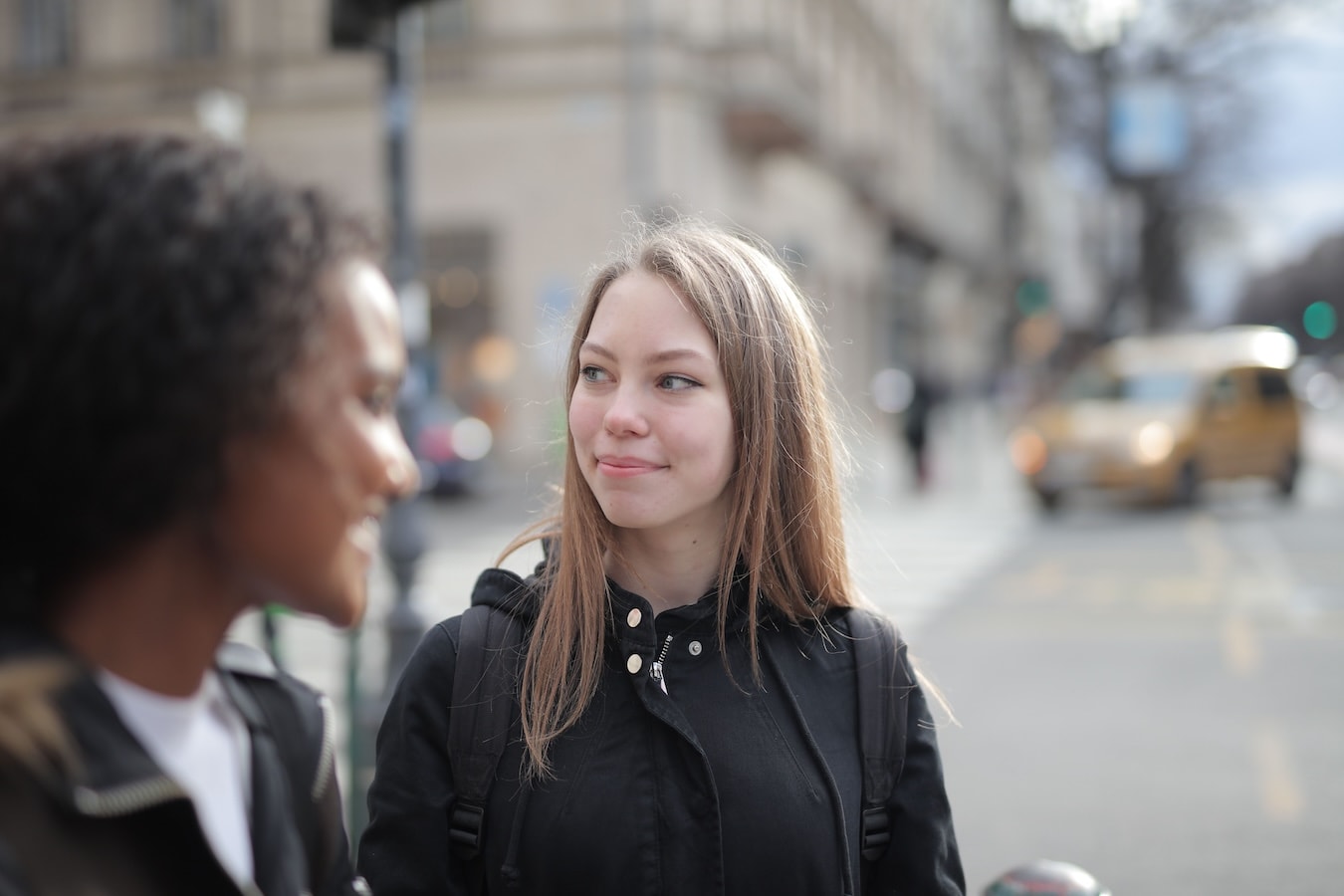
Prepare for a conversation
Concrete examples can make visible what is not always apparent in everyday life.
Observe without seeking a typical portrait
Preparing for a consultation may involve noting recurring situations before, during, and after. What is anticipated? What takes effort? What is avoided? What helps?
This preparation is not intended to persuade, but to provide concrete information for a more precise discussion.
How Cereya avoids fixed profiles
Cereya does not use a separate model for women. The assessment explores the same adult autism dimensions while allowing masking, impact, and compensation strategies to emerge when present.
This approach avoids creating a fixed profile. It supports understanding of individual functioning, with its resources and limitations.

Individual interpretation
The aim is to understand individual functioning, not create a single or fixed profile.
Cereya Adult Autism Test
Explore a way of functioning that may be subtle
Cereya can help organize concrete situations involving masking, fatigue, sensory experiences, routines, interests, and impact.
This process remains nondiagnostic and does not replace discussion with a trained professional.
- questions based on everyday situations
- a multidimensional view of functioning
- immediate free results
- a clear reminder of the assessment's non-diagnostic limits
Useful guidance
The Cereya Adult Autism assessment can help organize observations by situation, dimension, and impact, particularly when someone is considering adult autism or possible autistic traits. It does not provide a diagnosis or replace professional advice.

Cereya assessment
An online assessment can help structure your thinking, but cannot by itself confirm or rule out ASD.
Visual summary
Four steps to understanding
For autism in adult women, the most useful approach starts with real situations, considers the effort involved, and keeps the limitations in mind. Cereya helps organize this information around adult autism without turning self-observation into an autism diagnosis.
Observe concrete situations
Recording specific examples is more helpful than a general impression: context, how long it has been happening, frequency, fatigue, recovery, and impact.
Connect the dimensions
An isolated sign is not enough. Cereya looks for converging patterns across social functioning, sensory experiences, flexibility, masking, and impact to put possible autistic traits in context without turning them into a conclusion.
Keep the nuance
Other possibilities remain important: anxiety, ADHD, giftedness, life history, fatigue, and work or family circumstances.
Prepare for a conversation
If the question becomes important or the impact is substantial, a few written examples can make a conversation with a professional easier.
FAQ
Frequently Asked Questions
Is there a single female autism profile?+
No. There is no single profile. Some women have visible signs, others have compensated extensively, and many experiences do not fit simple categories.
Does masking explain all late diagnoses?+
It may contribute, but it is not the only explanation. Views of autism, social expectations, differential diagnoses, and access to professionals also play a role.
Can a highly sociable woman still explore this question?+
Yes. Having relationships, a family, or a career does not rule out autism. The question also concerns effort, strategies, and impact.
Can this page tell me whether I am autistic?+
No. An information page or self-assessment can help organize observations about adult ASD, adult autism, or possible autistic traits, but only a qualified professional can diagnose autism spectrum disorder.
How should I use a Cereya Adult Autism assessment?+
The result should be understood as a way to explore social, sensory, and cognitive functioning. It may suggest areas to look into further, but it neither confirms nor rules out ASD, also commonly searched for as autism spectrum disorder.
Can I be independent and still wonder whether I am autistic?+
Yes. Autistic people, or adults questioning whether their functioning may be autistic, may have strengths, compensate, mask certain difficulties, or mainly experience difficulties in specific settings. Visible independence does not reveal the full internal effort.
Why consider differential diagnoses?+
Because some signs may also be related to ADHD, giftedness, social anxiety, fatigue, nonspecific hypersensitivity, life history, or other factors. Careful interpretation helps avoid premature conclusions.
Bibliography and guidance
This page is an educational resource. It does not reproduce diagnostic criteria or replace a consultation. The references below provide context and can help prepare for a conversation with a professional if needed.